UP Becomes India’s New Energy Hub with Historic Growth in Power Sector
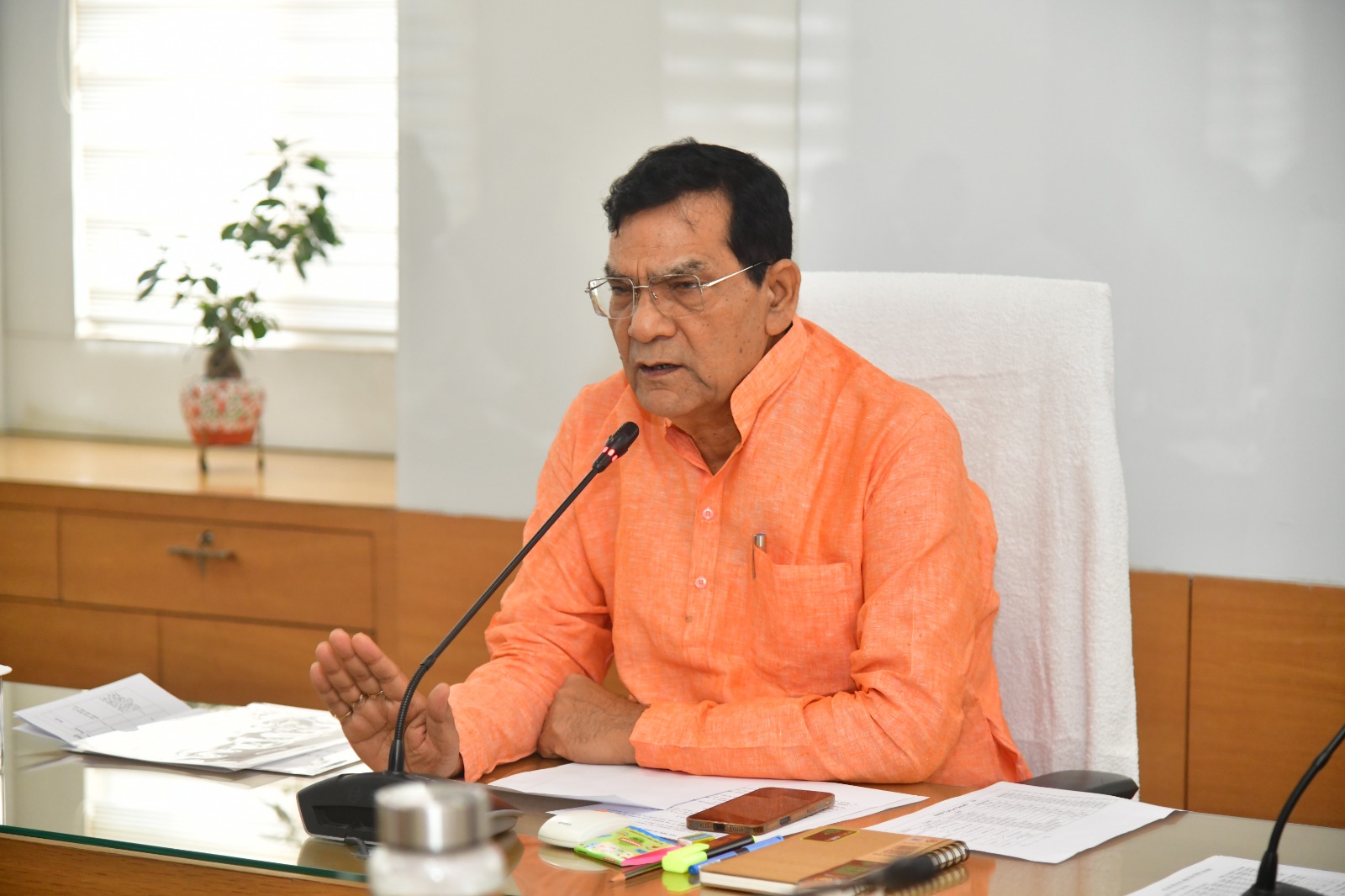
Lucknow: Minister A.K. Sharma said that Uttar Pradesh, once considered weak in the energy sector, is now rapidly transforming into one of the country’s strongest power hubs under the leadership of Prime Minister Narendra Modi and Chief Minister Yogi Adityanath.
Addressing the media in Lucknow, the Energy Minister said the state has achieved historic milestones in electricity generation, transmission, distribution, and renewable energy development over the past few years. He stated that Uttar Pradesh has now become the number one state in peak power supply in the country and is playing a leading role in implementing key central government schemes such as RDSS and the Green Corridor initiative.
Sharma highlighted that the state’s thermal power generation capacity has nearly doubled in the last four years. Per capita electricity consumption, which stood at 489 units in 2017, rose to 518 units in 2022 and has now reached around 630 units. He added that the state’s Plant Load Factor (PLF) has touched a historic 85 percent while AT&C losses have reduced despite record power supply.
Taking a swipe at the opposition, Sharma said some people were repeatedly spreading misinformation regarding the power sector. He reiterated that the government’s primary objective is to ensure 24×7 uninterrupted and quality power supply to every consumer while raising Uttar Pradesh’s per capita electricity consumption to the national average.
The minister said that during 2012–17, the state’s average peak power demand was only around 13,000 MW, whereas over the last four years it has increased to nearly 30,000 MW — about two-and-a-half times higher. Last year, Uttar Pradesh successfully met a record peak demand of 31,468 MW, while this year too the state efficiently handled a peak demand of 29,475 MW on April 28 despite unseasonal rains.
He noted that Uttar Pradesh has remained the top state in peak electricity supply for the past four years. The number of electricity consumers in the state has increased from 1.80 crore in 2017 to 3.70 crore at present, with nearly 50 lakh new electricity connections provided in the last four years alone.
Sharma further said that while only 1.20 lakh hamlets had been electrified till 2017, an additional 1.75 lakh hamlets have been connected to electricity in the last six years. Thermal power generation capacity has increased from 5,160 MW in 2017 to 9,120 MW currently, with nearly 4,000 MW added in the last four years. The 660 MW Ghatampur project is also expected to commence operations soon.
According to the minister, the state’s total available power from all sources, which was 11,803 MW in 2017, has now crossed 22,000 MW in 2025. To meet future demand, projects including Obra-D, Anpara-E, Meja, and Mirzapur are expected to add another 10,600 MW of capacity. He said arrangements for 55,840 MW capacity have already been planned keeping in view the state’s requirements till 2034.
In the transmission sector, Sharma said the capacity of major substations has grown from 39,000 MVA in 2017 to nearly 2 lakh MVA today, earning Uttar Pradesh recognition as the country’s best-performing transmission sector.

He added that more than 30 lakh damaged electricity poles have been replaced in the last four years, while over 1.65 lakh kilometres of old wires have been converted into AB cables. The government has also established 86 new 132 KV substations and 93 new 33 KV substations, besides upgrading over 1,500 substations and installing or upgrading 10.71 lakh transformers across the state.
Highlighting progress in the agriculture sector, Sharma said that while 10 lakh tubewell connections had been provided to farmers till 2017, another 5 lakh connections have been added in the last eight years. Villages are now receiving 18 to 20 hours of power supply daily, while urban areas are getting uninterrupted 24-hour electricity.
The minister also stated that Uttar Pradesh is the only state in the country where electricity tariffs have not been increased in the last six years. Farmers are being provided free electricity, while nearly half the consumers are receiving power at almost half the actual cost.
On renewable energy, Sharma said Uttar Pradesh has emerged as the country’s leading state under the PM Surya Ghar Yojana in terms of daily installations. In April 2026, the state ranked first nationally under the scheme, with Lucknow emerging as the top-performing district in the country. With over four lakh installations and around 1,400 MW generation capacity, Uttar Pradesh has climbed to the third position nationally in solar energy production.
He further said that Ayodhya has become India’s first solar city, while 16 other cities are moving rapidly toward similar goals. The state’s solar power capacity has now reached 3,000 MW, with another 11,000 MW worth of projects in the pipeline.
In the bio-energy sector too, Uttar Pradesh has become the top state in the country with 25 CBG plants producing nearly 240 tonnes daily, directly benefiting farmers and rural families. Sharma said the state is moving rapidly toward achieving the Prime Minister’s “Net Zero 2070” target through solar, bio, hydro, and nuclear energy initiatives.
He concluded by saying that the adoption of technology and professional management practices has significantly improved departmental efficiency, reduced transformer faults and billing errors, and enabled consumers to generate their own bills through IT-enabled systems and mobile applications.
“Electricity production has increased, supply has become uninterrupted, and power infrastructure has strengthened across every region. Uttar Pradesh today stands among the leading states in India’s energy sector,” Sharma said.